

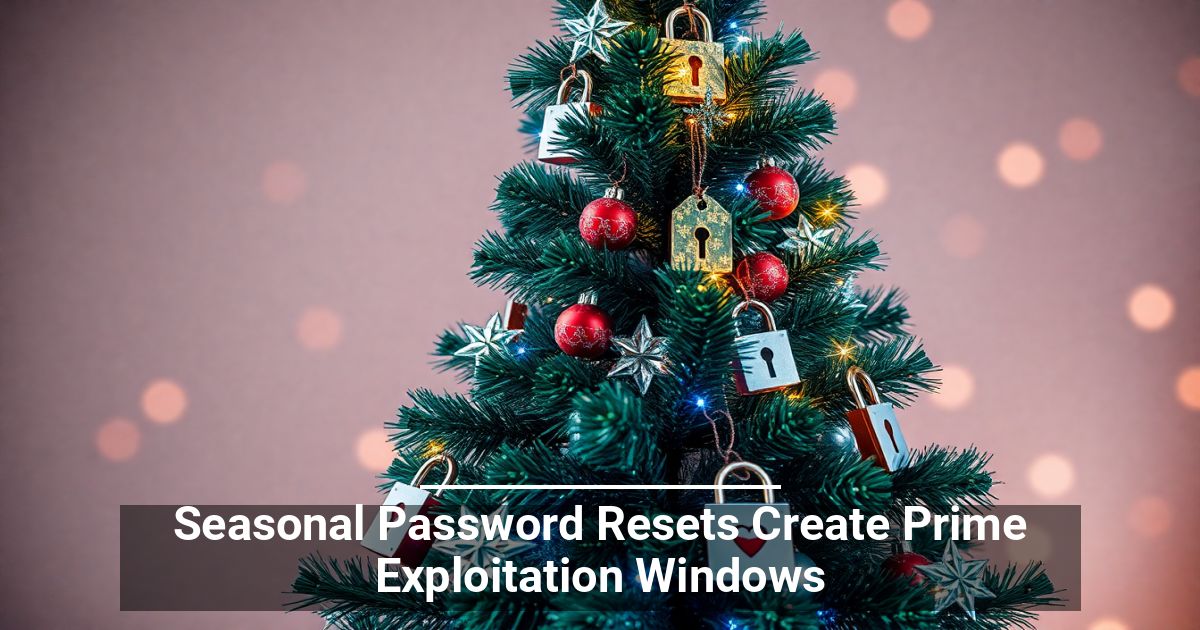
 Every year, around the holidays, employees across every industry hit the reset button. A new year means a fresh start, which often includes setting new passwords. But that timing creates predictable openings for attackers, and when it comes to password resets, the holiday season may be one of your most vulnerable moments.
A recent analysis of 800 million compromised credentials revealed a surprising trend. When users have to rotate their passwords, many reach for festive inspiration. The dataset included hundreds of thousands of holiday-themed passwords, from “HollyJolly2024!” to “R3indeer,” and everything in between. Some looked complex at a glance, but attackers still had no trouble exploiting them.
Why Holiday-Themed Passwords Are a Bigger Risk Than They Seem
Specopssoft’s latest report dug into hundreds of thousands of real compromised passwords and clear patterns in festive password patterns, like Christmas2024, MerryXmas123, and Winter2025.
Even the “clever” ones with substitutions (Chr1stm4s!, H@lloween2024) get cracked in seconds because modern hackers can scan for every holiday word in every language and their common iterations.
Part of the problem is that when people are under pressure to reset their credentials, they aren’t necessarily thinking about password reset security. They are thinking about what they’ll remember and often rely on emotional cues, like holidays.
To the average person, these passwords might seem secure. To modern password cracking tools, they’re predictable, indexable, and instantly breakable. These choices significantly increase credential stuffing risk.
Why Seasonal Password Resets Are Handing Hackers a Gift-Wrapped Opportunity
Many organizations require mass password resets at the end of each quarter, the end of the year, or after major holidays. Threat actors receive a neatly packaged schedule of seasonal security blind spots.
Combine that with a surge in festive password patterns, and you end up with the perfect storm: a high volume of new, guessable passwords, lower staffing levels over the holidays, and more remote logins from unsecured networks. Attackers know this and may build credential-stuffing campaigns around your reset calendar. While you’re sipping eggnog or carving pumpkins, bots are hammering your login pages with millions of holiday variants.
Seasonal Security Blind Spots You Can Fix Today
You don’t need a bigger security budget to tighten your defenses, just smarter habits and policies.
- Ban holiday and seasonal words from passwords. Add Christmas, Halloween, Easter, summer, winter, Valentine's Day, New Year (and hundreds of variants) to your blocked word list.
- Vary reset timing. Randomize mandatory changes instead of syncing them with the calendar.
- Require longer passphrases instead of seasonal passwords. A random four-word phrase beats “Frosty2025!” every single time.
- Turn on breached password protection. Automated screening tools block known bad patterns, leaked credentials, and holiday-themed passwords in real time.
- Use a password manager. Deploy a company password manager so employees never have to create another password.
- Enforce multi-factor authentication across every account. Even a cracked password becomes far less damaging when MFA stands in the way.
Seasonal workflows may be unavoidable, but seasonal password habits don’t have to be. Understanding how predictable patterns shape your organization’s risk is the first step to strengthening your password reset security practices and keeping festive vulnerabilities from turning into costly holiday surprises.